Smart devices are now present in almost every household. Tablets, phones, smart TVs – even very young children often encounter them on a daily basis. But what kind of effect does this actually have on their development? A recent study has produced some important and thought-provoking findings.
More and More Time Spent in Front of Screens
According to studies, the amount of time young children spend in front of screens keeps increasing. In many cases, children as young as 2-3 already spend several hours a day using various digital devices.
This is understandable to some extent: a show or a game can be a practical help for parents while they take care of something. At the same time, researchers warn that excessive screen use can have serious consequences.
Effects on Psychological Development
One of the study's most important findings is that too much screen time can be linked to a slowdown in children's psychological development.
Differences were observed particularly in the following areas:
- Communication skills – with less live interaction, speech may develop more slowly
- Attention and concentration – becoming accustomed to rapidly changing stimuli can make it harder to focus
- Social skills – less personal contact → weaker social skills
Researchers emphasize: the technology itself isn't the problem, but rather its extent and the way it's used.
The Most Critical Age: 0-3 Years
Early childhood is a particularly sensitive period. This is when the nervous system, speech, and social bonding develop intensively.
According to experts:
- Under age 2, screen use should preferably be avoided
- Later on, limited and mindful use is still recommended
This doesn't mean a total ban, but rather establishing conscious boundaries.
What Can Parents Do?
The good news is that a few simple rules can significantly reduce the negative effects.
1. Set a limit Establish a maximum daily screen time and stick to it.
2. Make it a shared experience If there is screen time, watch or play together whenever possible, and talk about what you saw.
3. Real interaction above all Conversation, playing together, movement, and reading stories are irreplaceable.
4. Don't use it as a "digital babysitter" It helps in the short term, but can cause developmental setbacks in the long run.
What Can We Use to Replace Screen Time?
The best "alternative" isn't another device, but an active, shared experience. Activities that get the child moving, encourage thinking, and involve the parent as well offer far more in the long run.
Examples include:
- Montessori-inspired motor development toys, such as the rainbow rocker or balance board, which playfully develop balance, coordination, and body awareness
- educational toys, such as products from Buki France, which spark curiosity and turn learning into an experience
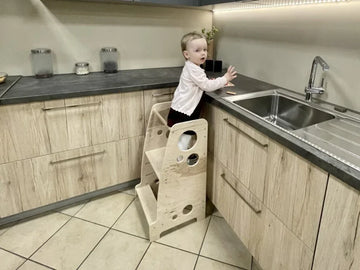
- the learning tower, which allows the child to join in everyday activities – such as cooking – creating genuine shared time
These tools don't just "occupy" the child – they involve, develop, and build connection.
Balance, Not Prohibition
It's important to emphasize: digital devices aren't "enemies." Used appropriately, they can be useful and even have a developmental benefit.
The key is balance:
- How much time the child spends in front of a screen
- what kind of content they consume
- how much real, human connection they experience day to day
Summary
Technology is part of the modern world, but the foundations of child development remain the same: connection, play, movement, and attention.
The message of the research is clear: the question isn't whether a child uses smart devices, but how and how much. And when we consciously choose alternatives – such as motor development toys, creative play, and shared activities – we not only reduce screen time, but also support our child's development with real, quality experiences.